A recurring problem in Nottingham's urban excavations is specifying a one-size-fits-all anchor system without reconciling the stiffness contrast between the superficial River Trent alluvium and the underlying Mercia Mudstone Group. When a pre-stressed active anchor is installed into weathered mudstone with a poorly characterised bond zone, the lock-off load can degrade within weeks, leaving a supposedly restrained sheet pile wall to rotate into the excavation. The issue is rarely the anchor steel itself but the misunderstanding of how the load transfers from the fixed length into a bedrock that transitions from Grade III to Grade I material across a depth of less than two metres. The British Drilling Association has documented similar bond creep mechanisms in the East Midlands, and our team has correlated these observations with site-specific pressuremeter data in the city centre. Where the mudstone contains gypsum bands, as it does in parts of Beeston and Lenton, the long-term tendon protection strategy becomes critical, which is why we often recommend complementing the anchor design with a detailed triaxial testing program to quantify the drained strength envelope before finalising the unbonded length.
In Nottingham's Mercia Mudstone, the difference between an active and passive anchor is not merely prestress but the entire serviceability limit state verification for the retained height.
Service characteristics in Nottingham
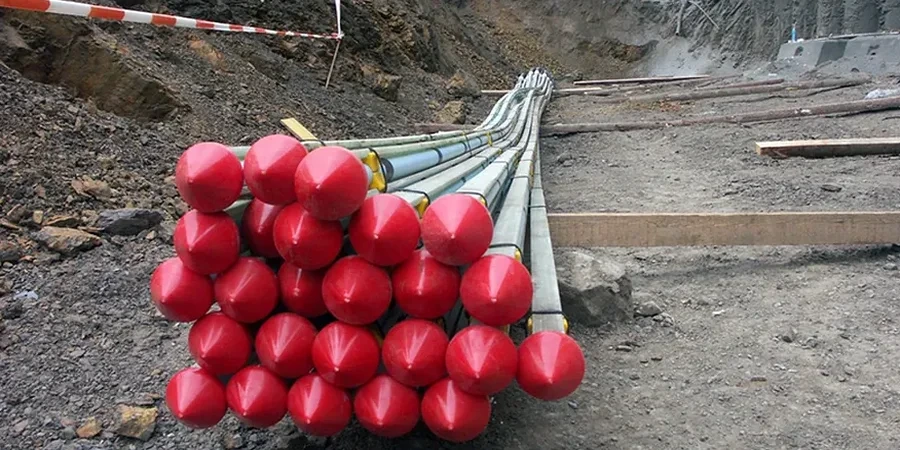
Risks and considerations in Nottingham
One observation from multiple deep basement projects near Nottingham Midland Station is that the relaxation rate of active anchors can accelerate if the stressing sequence does not account for the elastic rebound of the mudstone during multi-stage excavation. A contractor who tensions all anchors in a single row before excavating the next lift often records a 12–15% load drop in the upper anchors by the time the formation level is reached, simply because the wall's incremental deflection stretches the free length beyond the jacking extension. The permanent anchors then operate at an effective prestress closer to a passive condition, which invalidates the serviceability deflection prediction. In the sandstone units that outcrop around the Castle Rock area, the risk profile shifts to a brittle failure of the grout-ground interface if the drilling method over-flushes the borehole and smears the sidewalls with a low-permeability cake. Our technicians specify water flush rates below 15 litres per minute in that lithology and confirm the bond zone integrity with water injection tests before grouting.
Our services
The anchor design package for Nottingham sites is structured around the specific demands of the Mercia Mudstone and the regulatory framework of the Building Safety Act's geotechnical provisions.
Active Anchor Design for Deep Excavations
Full ULS and SLS verification of pre-stressed multi-strand anchors for basement and cut-and-cover structures, including anchor load testing specifications and lock-off sequence programming. The design incorporates the stiffness degradation of Mercia Mudstone Group strata under repeated loading cycles, with a focus on bond length optimisation through back-analysis of site-specific load-displacement curves.
Passive Anchor and Soil Nail Analysis
Design of self-drilling and driven passive anchors for temporary and permanent slope stabilisation in the Triassic mudstone and sandstone formations. The analysis models the nail-soil interaction using the two-parameter subgrade reaction method, calibrated with local pressuremeter data to avoid the over-prediction of pull-out resistance that occurs when generic correlations are applied to the East Midlands lithology.
Common questions
What is the typical cost range for an active/passive anchor design package for a Nottingham project?
For a site within the Nottingham city area, the design package for a retained height up to 6 metres, including the anchor layout, ULS/SLS calculations, and the stressing sequence specification, typically falls between £800 and £3,180. The final fee depends on the number of anchor rows, the complexity of the ground model (especially if gypsum-bearing mudstone is encountered), and whether the anchor testing specification must be integrated into a Construction Phase Plan under CDM 2015.
Why does BS EN 1997-1 distinguish between active and passive anchors in the design process?
The distinction is fundamental to the limit state philosophy. An active anchor is pre-stressed to impose a controlled load on the structure, and its design must verify that the lock-off load does not exceed the tendon capacity while ensuring the ground can sustain the bond stress without excessive creep. A passive anchor, by contrast, only develops resistance when the structure deforms, so the design must prove that the displacement required to mobilise the anchor force is compatible with the serviceability limits of the retained structure and any adjacent buildings. In Nottingham's Mercia Mudstone, this serviceability check often governs the design because the mudstone's stiffness degrades significantly under sustained load.
How do you determine the bond length in the Mercia Mudstone Group for an anchor?
We do not rely on tabulated bond stress values alone. The design bond length is determined through a combination of on-site suitability testing, where sacrificial anchors are loaded to failure and the load-displacement curve is analysed, and laboratory strength testing on intact mudstone cores to quantify the undrained shear strength profile. The fixed anchor length is then calculated by applying a partial factor on the characteristic bond resistance, with an additional allowance for the reduction in borehole diameter that can occur in weathered mudstone due to stress relief during drilling.
What corrosion protection is required for permanent anchors in Nottingham's ground conditions?
For permanent anchors with a design life exceeding two years, BS EN 1537 mandates a double corrosion protection (DCP) system where the tendon is isolated from the grout by a corrugated plastic sheathing and the anchor head is encapsulated in a protective cap filled with corrosion-inhibiting compound. This is non-negotiable in the Mercia Mudstone environment because the sulphate content can be aggressive to steel, and the fluctuating groundwater levels in the sandstone-mudstone transition zone create alternating wet and dry conditions that accelerate corrosion if a single-barrier system is used. More info.