Nottingham’s built environment rests on a demanding geological patchwork. The Triassic Mercia Mudstone and Sherwood Sandstone groups dominate, but it’s the overlying Quaternary drift and alluvial pockets along the River Trent that create real variability. Victorian developers in the Lace Market learned this the hard way, dealing with compressible clays that still challenge modern foundation design. Atterberg limits testing provides the critical plasticity data needed to classify these fine-grained soils. BS 5930 and Eurocode 7 mandate this index property for any site where cohesive behaviour governs performance. We run liquid and plastic limit determinations in our accredited lab, delivering results that feed directly into bearing capacity assessments and settlement predictions across Nottinghamshire.
Atterberg limits transform a handful of clay into a behaviour profile — essential when Nottingham clays meet water.
Service characteristics in Nottingham
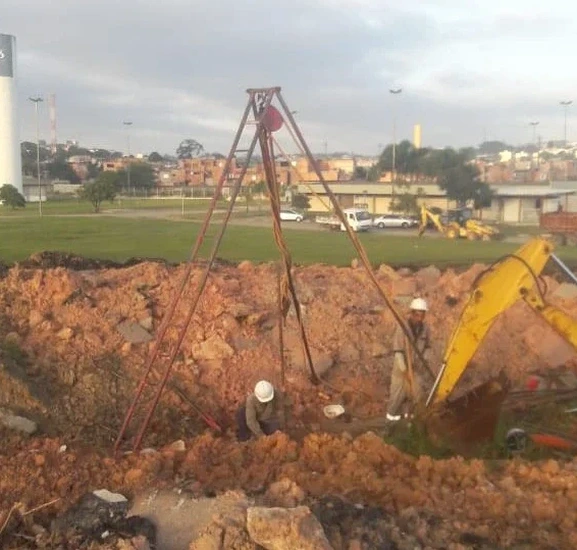
Field demonstration
Risks and considerations in Nottingham
The Mercia Mudstone that underlies much of central Nottingham weathers to a stiff, overconsolidated clay with moderate to high plasticity. When exposed in excavations, it absorbs water and swells; when it dries, it shrinks and cracks. Misclassifying this material — or assuming it behaves like a silt simply because it looks silty — leads to underestimating heave pressures and settlement times. The River Trent’s alluvial terraces add another layer of complexity: soft, normally consolidated clays with liquid limits often exceeding 60 percent. Without Atterberg data, a site investigation is incomplete. BS 5930 classifies these soils into plasticity ranges that directly inform empirical design correlations. Ignoring this test means guessing on volume change potential, and in Nottingham’s post-industrial brownfield sites, that guess can prove expensive.
Our services
Our Atterberg limits testing forms part of a wider geotechnical laboratory programme. We handle sampling, transport, preparation, and reporting under one quality system.
Liquid & Plastic Limit Suite
Full BS EN ISO 17892-12 determination with natural moisture content, liquidity index, and plasticity chart classification.
Expedited Testing
Same-week results for active construction phases. Priority processing with interim verbal reporting.
Combined Classification
Atterberg limits paired with particle size distribution per BS 1377 for complete fines characterisation.
Site Investigation Support
Sampling guidance, Shelby tube logistics, and lab scheduling aligned with your ground investigation programme in Nottingham.
Common questions
What do Atterberg limits testing cost in Nottingham?
A complete liquid and plastic limit determination typically ranges from £50 to £70 per sample, depending on preparation requirements and whether natural moisture content is included. Batch pricing applies for larger site investigation programmes.
How long does the Atterberg test take?
Standard turnaround is three working days from sample receipt. We can deliver results within 24 hours for urgent jobs — let us know the schedule when you submit the samples.
Which Nottingham soils most need Atterberg testing?
Mercia Mudstone weathered clays and Trent alluvial deposits are the priority. Both exhibit plasticity ranges that directly affect foundation design and earthworks specification. Any fine-grained soil on site warrants classification. More info.